
5 min read

Blog
At Basqo, we‘ve been talking to hundreds of Finance and People leaders about their workforce planning. While their businesses are different (size, vertical, maturity), they all share the same goal: structured, clean reporting by a fixed deadline. Headcount number, hiring plan, cost forecast, these kind of metrics.
What’s different is how they get there. Some teams have it figured out . Some are struggling to find routine. And the pain points are remarkably consistent across all of them: nobody is sure who owns what, the same questions get asked every month, and by the time the numbers land in a board deck, half the people in the room quietly suspect they’re wrong.
So here’s the question I want to put on the table: why don’t we treat people reporting the way Finance treats its monthly close?
A quick recap, for the people who’ve never sat next to an Accounting team
Accounting teams have a rhythm. Around the same time every month, a small ritual takes place. Invoices are booked, accruals posted, intercompany squared. The BWA goes out. Cash gets reconciled. By the time the close is signed off, FP&A knows exactly what they’re standing on, and management and investors get to look at numbers that someone has actually agreed are correct.
It is, honestly, the most underrated source of organisational discipline I’ve come across. Everyone knows what to deliver. Everyone knows when. And once it’s done, it’s done.
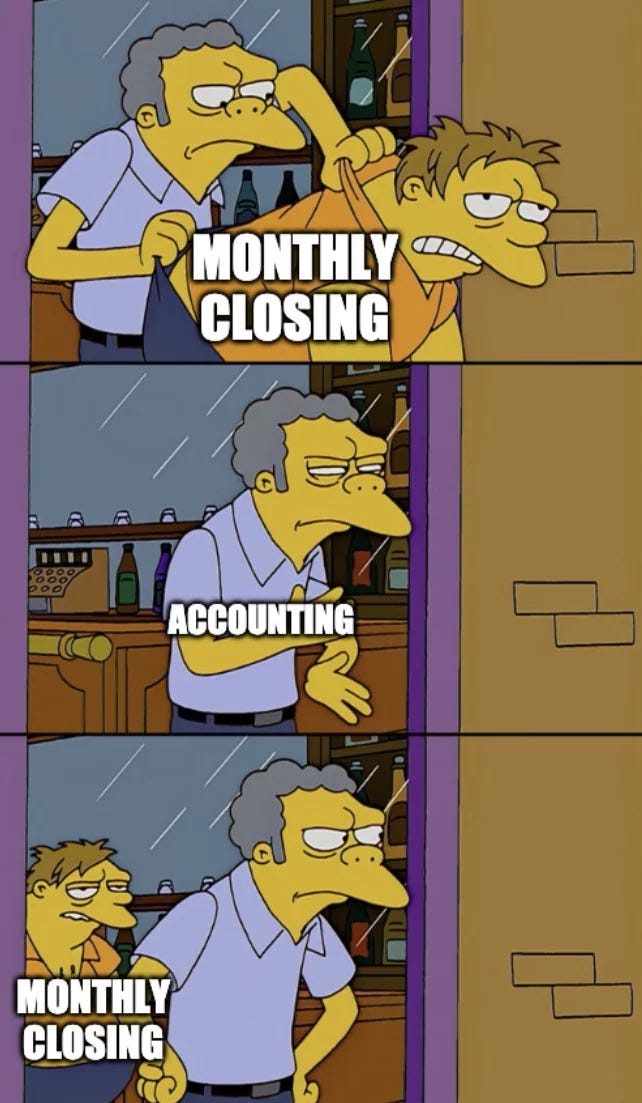
The interesting bit: in Finance, the question isn’t should we have a close? That argument was won decades ago. The question is how do we make the close faster, cleaner, less painful? That’s the conversation worth having. People teams aren’t there yet. People teams are still arguing about whether the close is necessary at all.
The unglamorous reality of People team data
Payroll has its own cadence — fine, payroll always finds a way. But everything around payroll? Soft.
When does a comp change actually need to be in the HRIS? When should a new manager assignment show up on the org chart? When should the bulk upload of variable comp data take place? Is there a real deadline for closing out leaver data in your Workforce Plan, or does it just sort of happen? When do planned positions get merged into hired employees? When does an open role in the ATS get linked to the hiring plan? Are all the role requests for next quarter actually entered, with the fields filled in correctly?
Ask three People in any mid-sized company and you’ll get four answers. Sometimes the answer is “ask PeopleOps, they usually know.”
I’m going to be blunt about something most leaders won’t say out loud. The People team isn’t the primary beneficiary of its own deadline. The people who benefit are FP&A and whoever consumes their reporting. A monthly people close is, fundamentally, a service the People team delivers to reporting recipients. There’s a small indirect benefit — fewer “quick questions” landing in Slack at 18:43 on a Thursday — but that’s not what makes it worth doing. It’s worth doing because somebody downstream has to make a forecast, write a board update, or file a statutory report, and right now that person is doing it on data they don’t fully trust.
That’s the honest framing. And once you accept it, the conversation changes — because then the close stops being an People team initiative looking for People team justification, and becomes what it actually is: a contract between People and Finance, with consequences on both sides if it slips.
At a 500-person company, a 0.5% data error costs 150,000€
There’s quite something at stake. Personnel costs are usually the biggest OPEX line in the business. Salaries, social contributions, bonuses, contractors, all the indirect stuff that sits underneath. Taken together, they tend to drown everything else on the P&L. A 0.5% data inaccuracy of a 500 employee company, which has around 30 EURm of Personell Expenses, is equivalent to 150,000€.
And yet, the master data behind that line item lives in a system nobody has formally agreed to close every month.
Headcount development, cost per FTE, team structure — these are board-deck staples. If the underlying data is two weeks stale, so is the story. FP&A’s people-cost forecast is built on assumptions that the HRIS reflects reality, which it doesn’t, quite.
When the largest cost block in the company is governed by data that lives in an update-it-when-you-get-a-chance culture, you’re carrying a quiet, real risk. Most CFOs sense it. Few say it out loud.
What it looks like when you actually do it
The good news is that you don’t need to invent anything. Finance has been doing this for a hundred years; the template is sitting there, well-thumbed.
Pick a working day each month. Call it the close. By that day, all known changes affecting the prior month must be in: new hires, terminations, role changes, comp adjustments, promotions, leaves, contract changes, hiring plan updates. Every category has a named owner: People Ops, Talent Acquisition, the HRBPs, the budget owners. And that person is accountable. No “the team will get to it.”
A monthly close is, in spirit, the corporate version of a newspaper’s print deadline. At some point the press rolls. Whatever made it in is the record. Whatever didn’t goes into the next edition. You don’t reprint yesterday’s paper because new facts came in overnight; you run the correction tomorrow. People teams need to make peace with the same idea. Late changes don’t break the close — they go into the next one.
If you want to start somewhere unambitious: pick a date, commit to it for one quarter, write down the data categories you absolutely cannot live without by that date, give each one an owner, and put recurring time blockers in everyone’s calendar. That’s it. You can refine forever, but starting takes a morning.
So what?
Finance has known for a century that you can’t run a serious business without a monthly close. People teams are overdue for the same realisation. Not because the data needs more bureaucracy around it, but because the function that owns the largest cost block in the company should treat the master data behind that cost block with at least as much rigour as the general ledger.
The teams that figure this out first don’t just produce cleaner reports. They produce a quieter People function. Less firefighting, fewer ad-hoc requests, more trust between Finance and People team, and frankly fewer awkward moments in board meetings. That’s a competitive advantage, and most companies still underestimate it.
This is the part of the work we care about most at Basqo. The platform matters, but the platform alone doesn’t produce trustworthy planning. The operating rhythm around it does. What we’re really selling, when you get down to it, is a way of working: a structured process, borrowed shamelessly from Finance, for getting people data into shape every month. The software is what makes it stick.
This is the first in what will probably become a short series on how the better workforce planning teams actually operate. If there’s a topic in this space you’d like me to dig into, leave a comment.

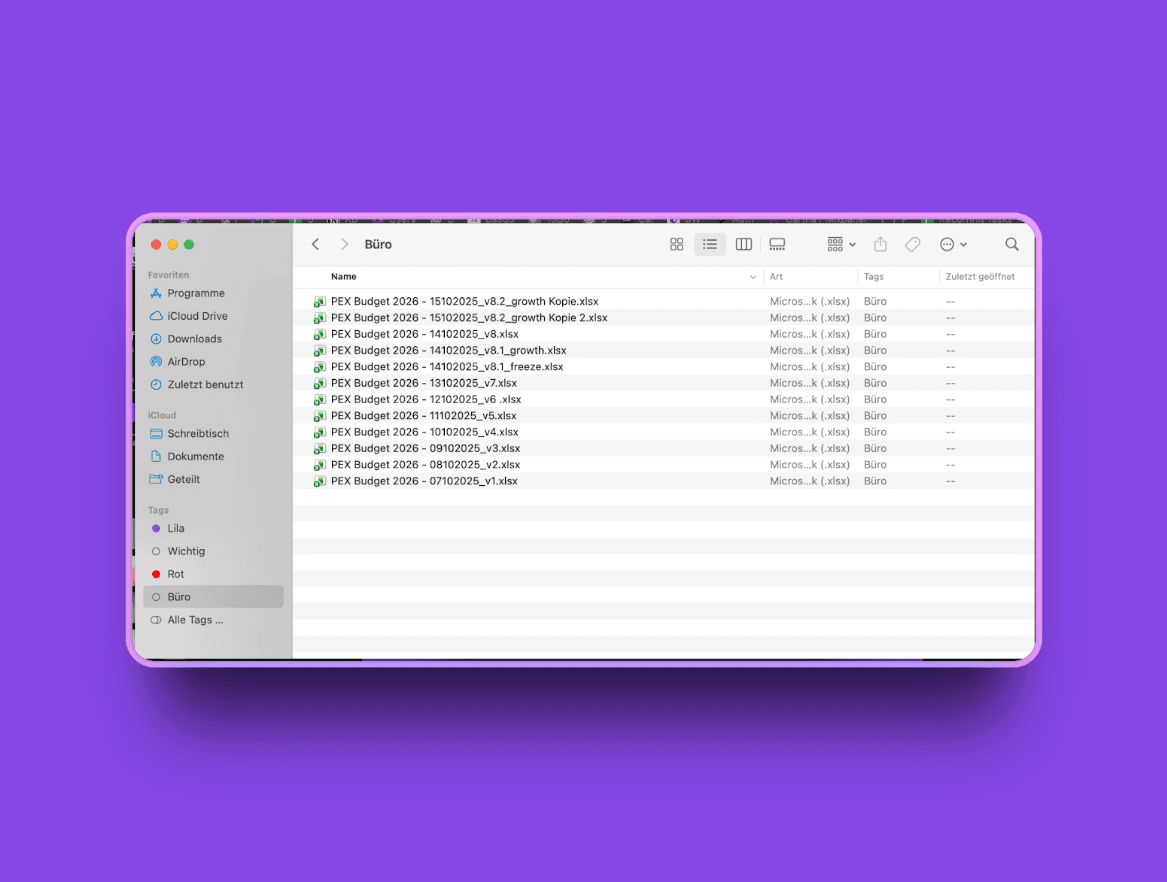

All your people data in one place





English

© 2026 Basqo. All rights reserved.